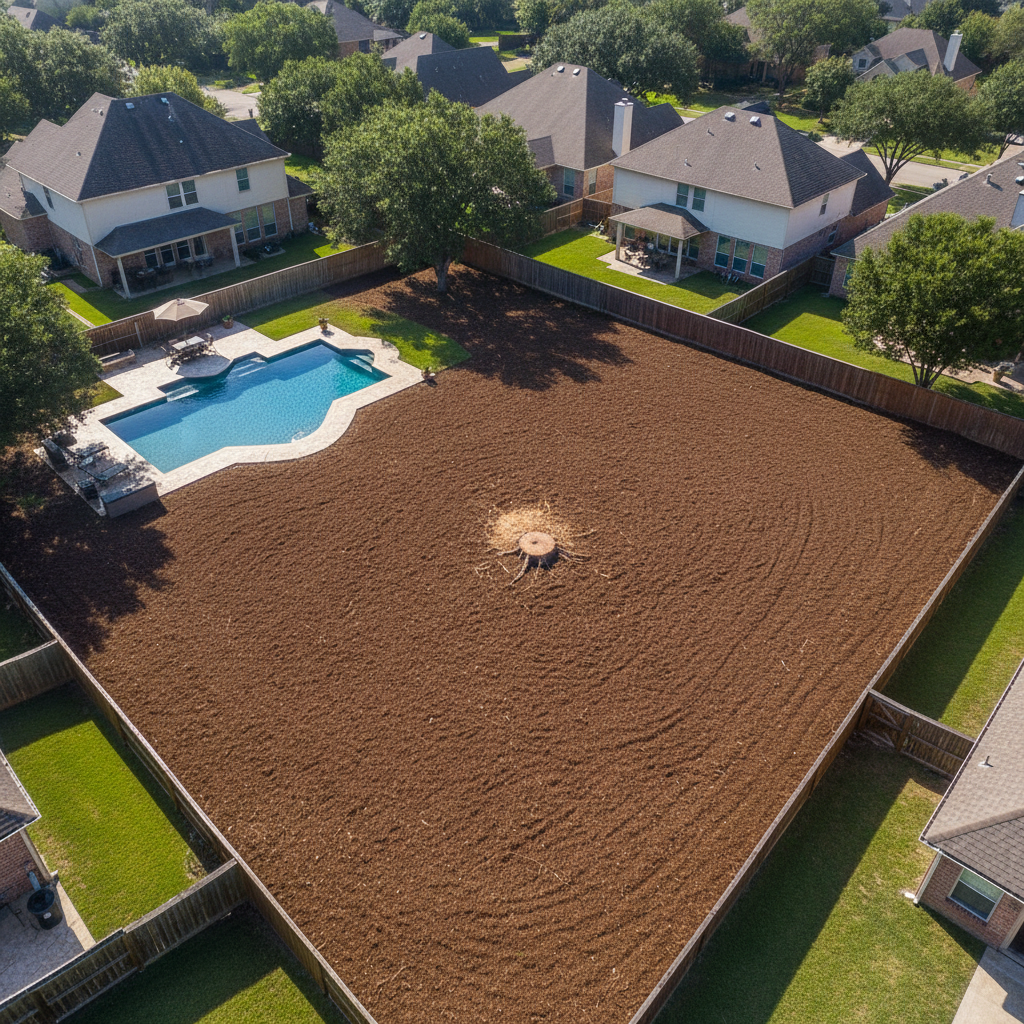
The skyyou forgotwas there.
ISA-certified crew. Hundred-foot removals between power lines and pool decks. Every limb hauled out before lunch.
"They took down a 90-foot pecan twelve feet from my roof. I watched the whole thing from the kitchen and never once felt nervous."
Every permit pulled, every crew member background-checked, every job documented with before-and-after photography. If the City of Houston asks, we have the paperwork.
Book Assessment →Houston's Three Most Dangerous Trees
Not every tree is a liability. But in a city that sits on expansive clay soil, parks hundred-year-old oaks next to slab foundations, and absorbs a direct Gulf hit every few years — these three species account for the majority of our emergency calls.
Live Oak (Quercus virginiana)
The coastal live oak is Houston's most beloved and most misunderstood tree. Mature specimens reach 40–80 feet in height with a canopy spread of 60–100 feet — roots that crack driveways, lift slabs, and invade sewer lines within fifteen years of planting too close to structure.
Shumard Oak (Quercus shumardii)
Beautiful fall color, catastrophic vulnerability. Shumard oak is considered extremely susceptible to oak wilt and can die within three to four weeks of first symptoms. A single infected tree can spread the fungus via root-to-root contact 75 feet per year.
Water Oak (Quercus nigra)
The tree we drop most often after Gulf season. Water oaks are fast-growing and short-lived — at maturity they develop internal decay that's invisible from the street. Hurricane-force winds exploit hidden cavities. By the time you see a lean, the root plate is already compromised.
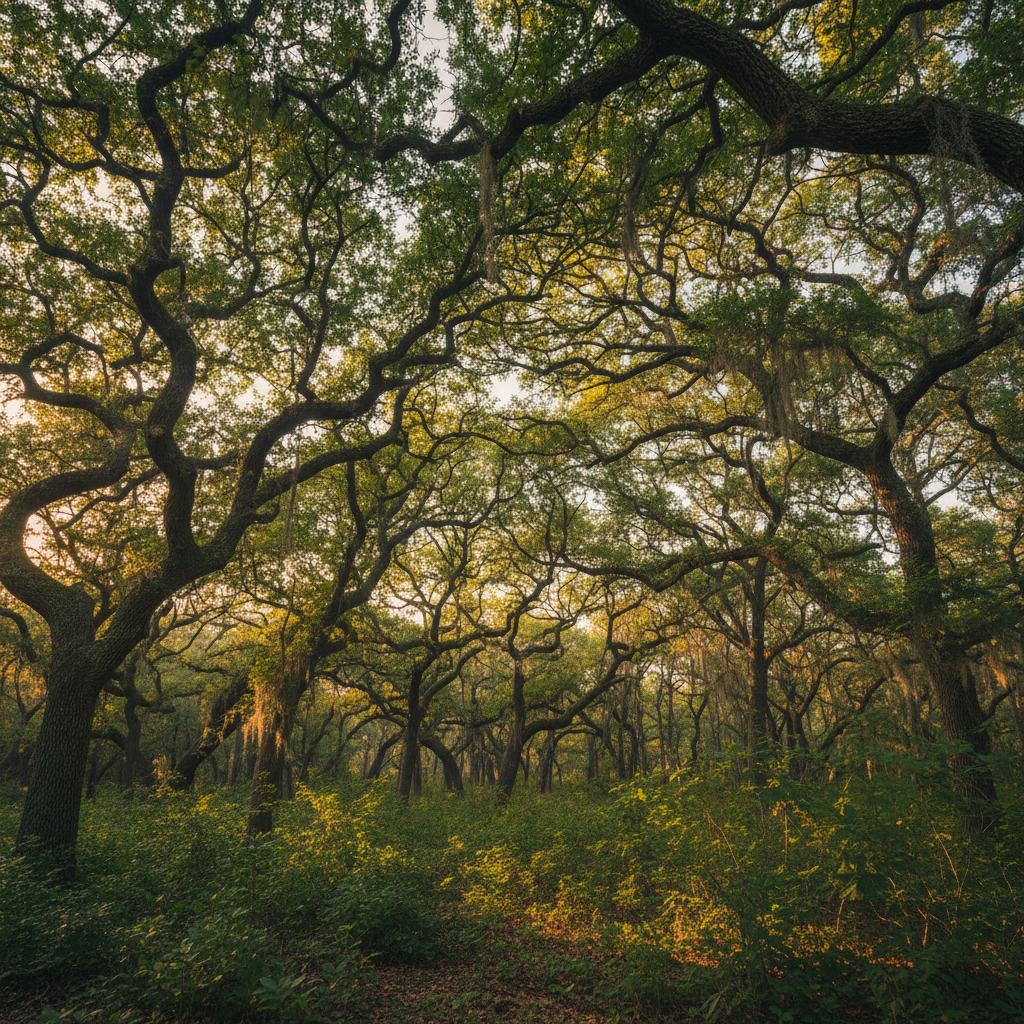
Identifying Oak Wilt Before It Spreads
Oak wilt is caused by the fungus Ceratocystis fagacearum, which destroys the water-conducting vessels of susceptible oaks. Early identification is the only intervention that matters.
Download Full PDF GuideYellow Vein Networks
Live oak leaves develop yellow veins that turn brown while the rest of the leaf remains green. Distinctive and unmistakable once you've seen it once.
Rapid Defoliation
A live oak can lose its entire canopy in one to six months. Red oaks move faster — three to four weeks from first symptoms to death.
Fungal Mat Odor
Beneath peeling bark on recently dead red oaks, fungal mats produce a sweet, fermenting smell. Beetles attracted to this odor become vectors, carrying spores to fresh pruning wounds.
Root Network Spread
Live oaks in dense groupings share interconnected root systems. Infection centers expand an average of 75 feet per year. Trenching 4 feet deep, 100 feet beyond the center, can halt spread.
Gulf Coast Pruning Calendar
Timing oak pruning in Houston isn't about aesthetics — it's about disease prevention. The safest windows align with beetle dormancy and temperature extremes.
Storm Prep Checklist for Houston Homeowners
The Gulf sends a named storm toward Harris County roughly every three years. The damage we see isn't random — it's the same species, the same ignored warning signs, the same trees that were already compromised before the wind hit.
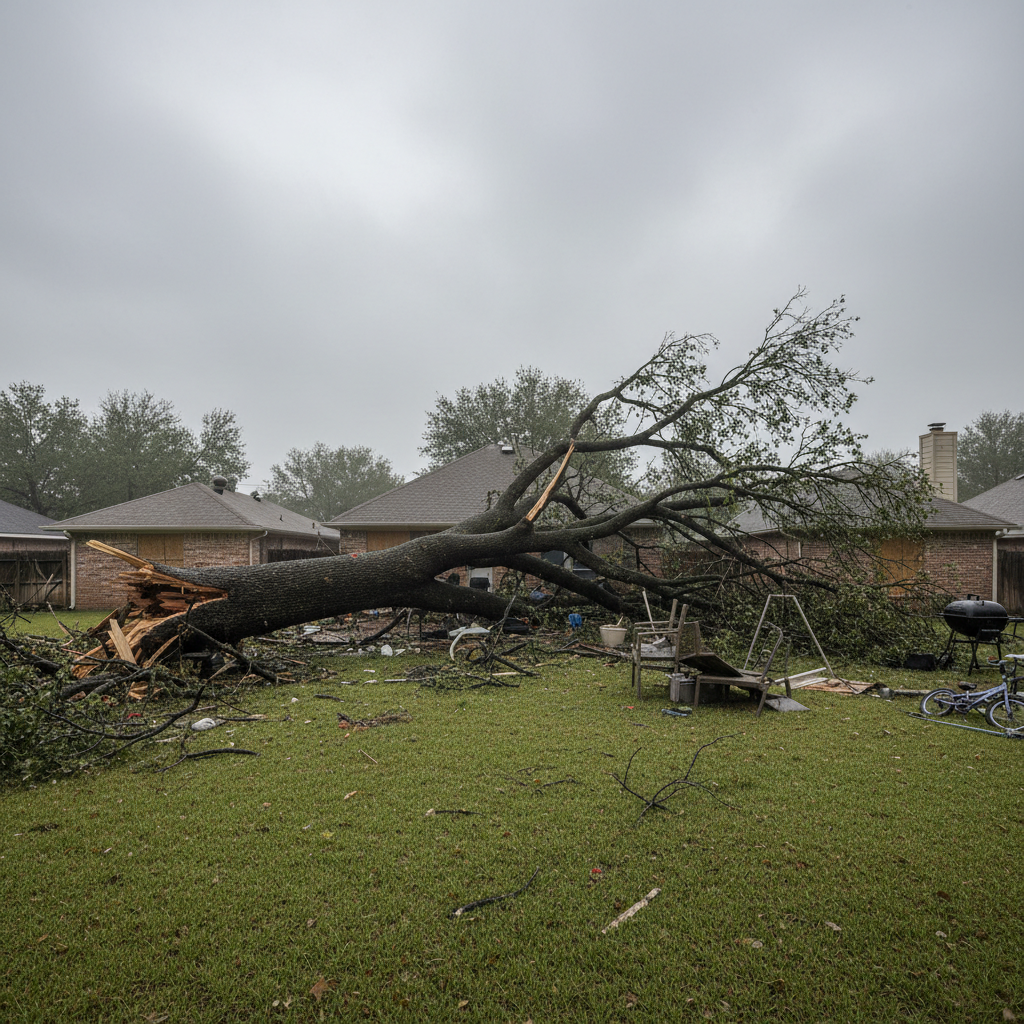
Before Storm Season (May–June)
- Schedule a hazard assessment for any oak over 30 inches DBH
- Remove dead or dying branches — they become projectiles at 80 mph
- Inspect root zones around driveways and slabs for heave cracks
- Document tree positions relative to structures for insurance purposes
- Identify water oaks with visible lean or crown dieback
After a Gulf Storm
- Do not approach leaning trees — root plate failure is unpredictable
- Photograph all storm damage before any cleanup for insurance claims
- Check for hanging limbs ("widow makers") before entering the yard
- Call Canopy within 24 hours — City of Houston allows emergency removal without permit
- Document stump locations if lot clearing is needed before listing photography
Year-Round Monitoring
- Watch for yellow vein patterns in live oak leaves (oak wilt early sign)
- Note any sweet-fermented odor near recently dead oaks
- Check for new cracks in driveways, walks, or foundation edges each spring
- Trim back any branch growth within 10 feet of roof or power lines
Property managers: we work directly with insurance adjusters and can provide photo documentation, debris weight estimates, and stump location surveys for claim filing.
Get Free Hazard AssessmentDownload the Houston Tree Care Guide
12 pages. Hazard tree profiles, oak wilt identification with photographs, the Gulf Coast pruning calendar, and a storm prep checklist you can print and keep in your garage.
- Houston's 8 most common hazard tree species
- Oak wilt: 4 identification stages with photos
- Month-by-month pruning calendar
- Post-storm documentation checklist
- When a permit is required in Houston
Get a Free Hazard Assessment
One of our ISA-certified arborists walks your property, identifies risk trees, and gives you a written report — no charge, no obligation. Most assessments take 30 minutes.